World Cup 2026 Winners and Losers: Final Tournament Review
World Cup 2026 Winners and Losers
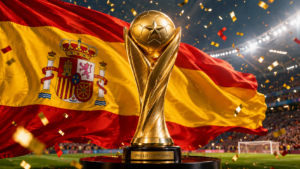
The World Cup 2026 winners and losers are now clear after Spain defeated Argentina 1-0 after extra time in the final at New York New Jersey Stadium. Ferran Torres came off the bench to score the decisive goal in the 106th minute, giving Spain their second men’s World Cup title and ending Argentina’s attempt to become the first back-to-back champions since Brazil in 1962.
But the final result tells only part of the story. The tournament delivered 104 matches, a new Round of 32, record crowds, breakout teams, historic scoring achievements and several painful exits for established powers. For bettors, it was also a reminder that reputation alone is rarely enough once fatigue, tactical matchups, squad depth and knockout pressure begin to shape the market.
For a closer look at how the deciding match was priced before kick-off, read our Spain vs Argentina betting tips. You can also browse the latest World Cup 2026 news and analysis on BettingGuru South Africa.
World Cup 2026 Final Facts and Award Winners
| Category | Confirmed Result |
|---|---|
| Champion | Spain |
| Runner-up | Argentina |
| Final score | Spain 1-0 Argentina after extra time |
| Winning goal | Ferran Torres, 106th minute |
| Third place | England, after a 6-4 win over France |
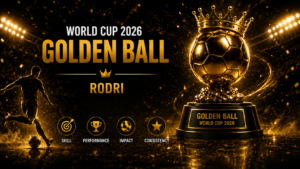
| Golden Ball | Rodri, Spain |
| Golden Boot | Kylian Mbappé, France – 10 goals |
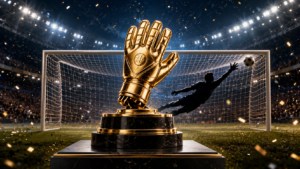
| Golden Glove | Unai Simón, Spain |
| Best Young Player | Pau Cubarsí, Spain |
| Tournament format | 48 teams, 12 groups, 104 matches |
World Cup 2026 Winners and Losers at a Glance
| Verdict | Team / Theme | Why it mattered |
|---|---|---|
| Winner | Spain | A second world title built on control, depth and the best defensive record in tournament history. |
| Winner | Rodri and Spain’s defensive spine | Rodri won the Golden Ball, Unai Simón the Golden Glove and Pau Cubarsí the young-player award. |
| Winner | Ferran Torres | His first goal of the tournament became the 106th-minute World Cup winner. |
| Winner | Kylian Mbappé | Ten goals secured a second consecutive Golden Boot and took him to 22 career World Cup goals. |
| Winner | England and Bukayo Saka | Third place, a 6-4 win over France and a Saka hat-trick produced a memorable finish. |
| Winner | Underdogs and the expanded format | Norway, Morocco, Paraguay, Cape Verde and Curaçao gave the 48-team event genuine unpredictability. |
| Loser | France’s final week | A 2-0 semi-final loss and a 6-4 bronze-match defeat exposed defensive problems. |
| Loser | Several traditional powers | Germany, Brazil and Portugal all exited earlier than many outright bettors expected. |
| Loser | Blind favourite betting | Big names repeatedly needed extra time, late goals or penalties – and some never recovered. |
| Loser | Player freshness | Eight-match campaigns, travel, heat and hydration breaks made workload impossible to ignore. |
| Loser | Fan affordability | Record crowds came alongside continued criticism of ticket prices and the cost of following teams across three countries. |
Winner: Spain Turn Control Into a Second World Title
Spain were the clearest winners of the tournament because they found several different ways to win. Their campaign began with a frustrating 0-0 draw against Cape Verde, but that early warning did not create panic. Spain responded by beating Saudi Arabia 4-0 and Uruguay 1-0 to top Group H, then improved as the pressure increased.
| Stage | Result | Key point |
|---|---|---|
| Group H | Spain 0-0 Cape Verde | A disciplined underdog block denied Spain in their opener. |
| Group H | Spain 4-0 Saudi Arabia | The attack clicked and Spain took control of the group. |
| Group H | Uruguay 0-1 Spain | Álex Baena’s goal secured first place. |
| Round of 32 | Spain 3-0 Austria | A comfortable start to the knockout phase. |
| Round of 16 | Portugal 0-1 Spain | Mikel Merino delivered the late winner. |
| Quarter-final | Spain 2-1 Belgium | The only match in which Spain conceded. |
| Semi-final | France 0-2 Spain | Spain shut down Mbappé and reached the final with authority. |
| Final | Spain 1-0 Argentina (a.e.t.) | Ferran Torres scored in the 106th minute. |
The numbers underline how complete the performance was. Spain conceded only one goal across eight matches, while Unai Simón kept seven clean sheets – the most by a goalkeeper at a single World Cup. The champions also finished the tournament unbeaten in 38 international matches, a new men’s international record.
This was not a tournament won by one superstar carrying an imperfect side. Rodri controlled the midfield, Pau Cubarsí played with remarkable maturity, Lamine Yamal stretched defences, and the bench repeatedly changed matches. Spain’s biggest strength was that their structure survived every tactical problem they faced.
Winner: Rodri, Unai Simón and Spain’s Defensive Spine
Rodri’s Golden Ball was a reward for control rather than headline chasing. He dictated the tempo, protected the centre and gave Spain the platform to dominate possession without becoming vulnerable to counterattacks. Behind him, Cubarsí and the rest of the defence reduced some of the tournament’s best attacks to scraps.
Unai Simón’s seven clean sheets and Golden Glove made him one of the strongest individual winners. Goalkeepers are often judged by spectacular saves, but Spain’s system also demanded concentration during long periods without action. Simón delivered both reliability and decisive interventions when opponents finally broke through.
Winner: Ferran Torres Produces the Goal of His Life
Ferran Torres entered the final without a goal at the tournament and left as the scorer of Spain’s most important strike since Andrés Iniesta in 2010. With Argentina reduced to ten men after Enzo Fernández’s dismissal, Torres reacted first to a bouncing ball and finished in the 106th minute. It was the perfect example of why squad depth mattered in an eight-match World Cup.
Winner: Kylian Mbappé Wins the Golden Boot Despite France’s Collapse
France finished fourth, but Mbappé still emerged as one of the tournament’s biggest individual winners. His two goals in the 6-4 third-place defeat took him to ten for the tournament and secured a second consecutive Golden Boot. They also lifted his career World Cup total to 22, moving him to the top of the men’s all-time scoring list.
For betting markets, Mbappé reinforced an important lesson: team and player outcomes can diverge. France disappointed in outright markets, while Mbappé backers in goals and Golden Boot markets were rewarded.
Winner: England and Bukayo Saka End on a Ten-Goal High
England’s semi-final defeat to Argentina was painful, especially after taking the lead, but the tournament did not end quietly. The Three Lions beat France 6-4 in the bronze-medal match, with Bukayo Saka scoring a hat-trick. England claimed third place for the first time and recorded their best World Cup finish since winning the competition in 1966.
The match also showed why bettors should treat third-place play-offs differently from semi-finals and finals. Teams often rotate, defensive discipline can drop and players have more freedom. A ten-goal game was extreme, but the conditions were far more suitable for aggressive goals markets than the cagey final that followed.
Mixed Verdict: Argentina and Lionel Messi
Argentina lost the trophy, so they cannot be placed among the tournament’s ultimate winners. Yet reaching a second consecutive final still confirmed their status as one of international football’s strongest knockout teams. Messi finished with eight goals and four assists, drove the late semi-final comeback against England and remained decisive at 39.
The final exposed the other side of Argentina’s campaign. Spain controlled the ball and territory, while Argentina failed to register a shot during normal time. Emiliano Martínez kept them alive with a string of saves, but the champions eventually ran out of answers. Whether or not this proves to be Messi’s last World Cup, the run added another major chapter without delivering the perfect ending.
Winner: The Expanded Format Creates New Heroes and New Risks
The first 48-team World Cup was bigger in every sense: 12 groups, a Round of 32 and 104 matches across Canada, Mexico and the United States. Before the final two games, FIFA had already reported more than 6.66 million spectators and 297 goals. The 6-4 bronze match and 1-0 final lifted the tournament total to 308 goals.
The extra places also produced stories that would not have existed in the old format. Cape Verde held Spain and reached the knockout stage, Morocco reached the quarter-finals, Norway eliminated Brazil, and Paraguay knocked Germany out on penalties. Curaçao and DR Congo also gave the tournament fresh identities and difficult matchups.
For bettors, however, more matches did not automatically mean easier profits. The expanded format increased the importance of rotation, third-place qualification scenarios, travel distances and motivation. The World Cup 2026 winners and losers were often decided by context that was not obvious from team rankings alone.
Loser: France’s Defence Unravels at the Worst Time
France reached the semi-finals and produced the Golden Boot winner, but their final week was a major disappointment. Spain beat them 2-0 without allowing their attack to take control, and England then scored six in the third-place play-off. Conceding eight goals across the final two matches was a brutal ending for a squad expected to challenge for the title.
The lesson for bettors is not to confuse attacking talent with complete team strength. Mbappé, Ousmane Dembélé and Michael Olise gave France enormous individual threat, but structural problems and defensive instability became more important as the level of opposition increased.
Losers: Germany, Brazil and Portugal Exit Earlier Than Expected
Several major names failed to justify short outright prices. Germany went out to Paraguay on penalties in the Round of 32. Brazil were beaten 2-1 by Norway in the Round of 16, and Portugal’s campaign ended with a 1-0 defeat to Spain at the same stage.
Those results were not random warnings to avoid favourites entirely. They showed that knockout markets must account for style. Norway had the physical and attacking tools to trouble Brazil, Paraguay were comfortable turning Germany’s tie into a low-margin contest, and Spain’s control denied Portugal the transitions they needed.
Loser: Blind Favourite Betting and Reputation-Only Accumulators
One of the clearest World Cup 2026 betting lessons was that a famous badge is not a betting strategy. The expanded field created more apparent mismatches, tempting bettors into large accumulators built around short-priced favourites. Yet rotation, heat, travel and conservative knockout tactics repeatedly turned “safe” selections into difficult games.
Comparing prices across reputable operators remains essential, especially for major tournaments with rapidly changing team news. Our guide to the best sports betting sites in South Africa explains the factors to check before choosing where to bet.
Loser: Player Workload, Heat and Long-Distance Travel
A finalist had to play eight matches in 39 days, one more than at previous World Cups. Teams also travelled across a vast three-country footprint, while hydration breaks became a standard part of every match. Those conditions made squad depth and recovery central to performance.
For player-prop bettors, this meant checking minutes, substitutions and recovery time rather than relying on tournament reputation. A star who had played 120 minutes in the previous round was not automatically the same betting proposition three or four days later. Managers with trusted benches gained an edge; teams dependent on a narrow core became increasingly vulnerable.
Loser: The Cost of Following the Biggest World Cup Ever
The attendance numbers were extraordinary, but bigger did not always mean more accessible. Ticket prices, accommodation and travel between host cities remained major talking points. Supporters following a team through multiple countries faced a financial and logistical challenge that went far beyond a normal single-host tournament.
That does not erase the atmosphere or record demand. It does show that the success of the expanded format should be judged by more than total attendance alone.
Six Betting Lessons From the World Cup 2026 Winners and Losers
- Defensive control travels well in knockout football. Spain conceded once in eight matches and won three knockout games by a single goal.
- Squad depth matters more in an eight-match route. Spain’s winning goal came from a substitute who had not scored earlier in the tournament.
- Separate team markets from player markets. France disappointed, while Mbappé still won the Golden Boot.
- Treat the third-place match as its own betting environment. Rotation and emotional freedom can produce far more open football than a final.
- Do not build accumulators from reputation alone. Germany, Brazil and Portugal all showed how quickly short-priced favourites can disappear.
- Use live context. Underdogs that survive the opening pressure often gain confidence while favourite prices become less attractive.
Final Verdict: Spain Lead the World Cup 2026 Winners and Losers
Spain leave North America as deserved champions and the biggest winners of the tournament. They combined the ball control traditionally associated with Spanish football with defensive discipline, squad depth and enough patience to survive tight knockout matches. Rodri, Unai Simón and Pau Cubarsí sweeping the major player awards reflected how complete the team was.
Mbappé, England, Saka and the tournament’s underdogs also leave with stronger reputations. France’s defensive collapse, the early exits of several giants and the failure of favourites-only betting strategies belong on the other side of the review.
The lasting message from the World Cup 2026 winners and losers is simple: the biggest tournament ever rewarded adaptable teams and punished lazy assumptions. More matches created more opportunities, but only for bettors willing to analyse the details behind the badge, the price and the headline.
Frequently Asked Questions
Who won the 2026 FIFA World Cup?
Spain won the tournament by beating Argentina 1-0 after extra time in the final. Ferran Torres scored the only goal in the 106th minute.
Who were the biggest World Cup 2026 winners and losers?
Spain were the biggest winners, while Rodri, Mbappé, England and several underdogs also enhanced their reputations. France’s finish, the early exits of Germany, Brazil and Portugal, and blind favourite betting were among the biggest losers.
Who won the 2026 World Cup Golden Boot?
Kylian Mbappé won the Golden Boot with ten goals. His two goals against England in the third-place match took him to 22 career World Cup goals.
Who won the Golden Ball and Golden Glove?
Spain captain Rodri won the Golden Ball, while Spain goalkeeper Unai Simón won the Golden Glove. Pau Cubarsí received the Best Young Player award.
What was Spain’s record at the tournament?
Spain won seven matches and drew one. They scored 14 goals, conceded only once and kept seven clean sheets.
Did the 48-team format work?
The expanded format produced record crowds, 104 matches, new knockout stories and more betting markets. It also increased the importance of rotation, travel, player workload and complex qualification scenarios.
BettingGuru SA Disclaimer
BettingGuru SA is an independent betting review and comparison platform. Odds and markets can change quickly and may differ between operators. We may receive commission from selected betting partners, but this does not affect our editorial independence. Please gamble responsibly. 18+ only.
Sources: FIFA.com | Associated Press | South African Responsible Gambling Foundation